
Why Choose The Auto Station as Your Tire Shop in Burlington?
Premium Selection of Quality Tires
As one of the top tire shops in Burlington, Ontario, we offer a wide range of high-quality tires from leading brands. No matter your vehicle or driving style, our tire inventory has options to suit your needs.
Expert Tire Guidance
Our experienced technicians are always ready to provide personalized advice and recommendations to help you choose the right tires. We consider factors like your vehicle type, driving habits, and Burlington's local weather conditions to make sure you get the most suitable tires.
Competitive Tire Pricing
We know that buying tires is an investment. That's why we offer competitive prices on all our tires in Burlington — so you get the best value every time.
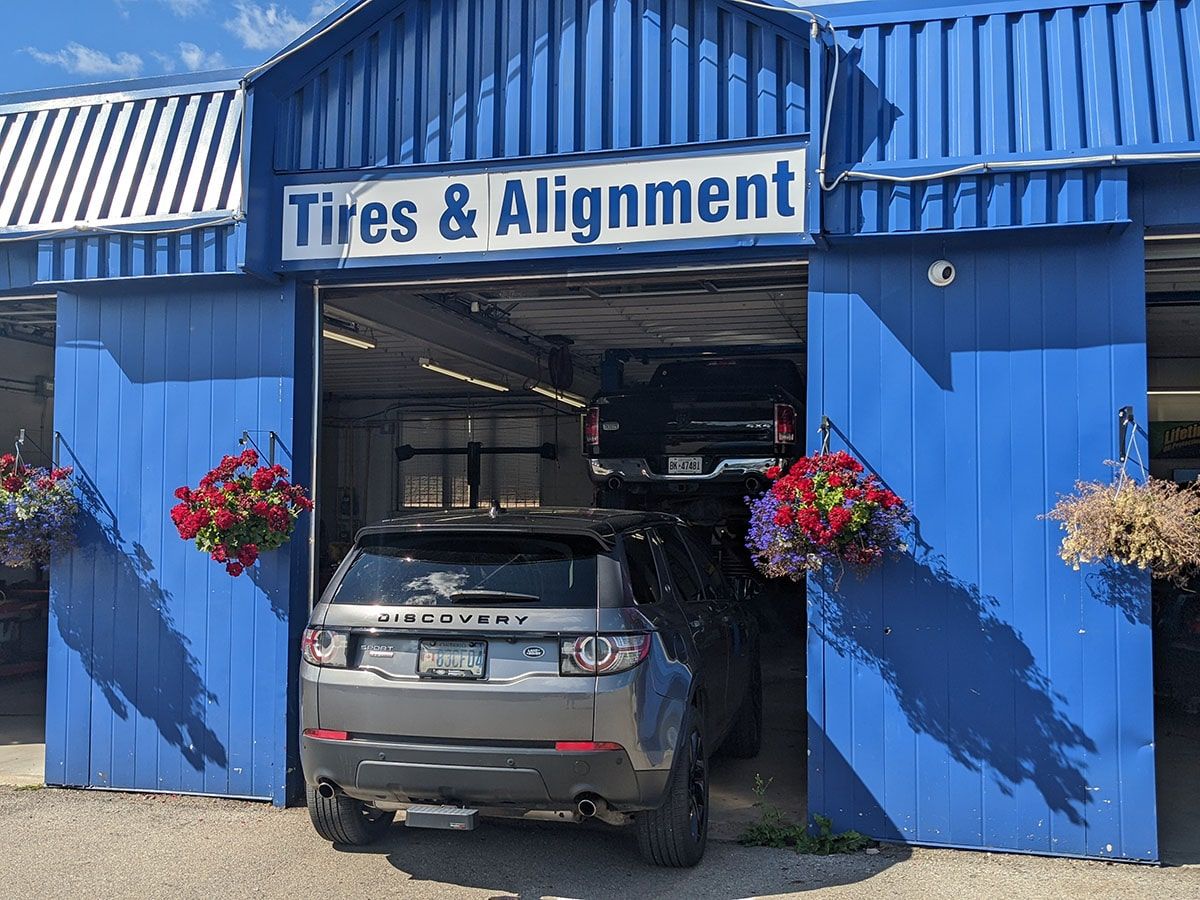
Buying Tires at The Auto Station
We don't just service tires — we sell them, and we'll help you figure out exactly what to buy. Whether you need a full set, a matched pair, or a single replacement, we'll make sure it fits your vehicle and suits how and where you drive around Burlington and Halton.
What tire brands does the Auto Station carry?
Our Burlington tire shop stocks trusted names including Michelin, Goodyear, Bridgestone, Pirelli, and Continental, with options across every budget. Here's how those brands and lines map to each tire type:
|
Tire type |
Brands we carry |
Notes |
|---|---|---|
|
All-Season |
Bridgestone, Cooper, Fronway, Goodyear, GT Radial, Haida, Ironman, Kelly, Mickey Thompson, Nexen, Sailun, Yokohama |
Not recommended for winter driving |
|
All-Weather |
Bridgestone, Falken, Firestone, Goodyear, Hankook, Nokian, Sailun, Toyo, Uniroyal |
Hybrid category, safety-certified for snow/cold |
|
Winter |
Bridgestone, Cooper, Falken, Firestone, Fronway, Goodyear, GT Radial, Haida, Hankook, Ironman, Kelly, Nokian, Yokohama |
Built for Ontario winters |
|
Summer / Performance |
Bridgestone, Dunlop, Falken, Fronway, Goodyear, Haida, Hankook, Ironman, Mickey Thompson, Nexen, Toyo |
High-speed handling and cornering |
|
All-Terrain (truck & SUV) |
BF Goodrich, Cooper, Falken, Fronway, Goodyear, GT Radial, Haida, Ironman, Kelly, Mickey Thompson, Nexen, Sailun, Toyo, Uniroyal, Yokohama |
Highway comfort and off-road traction |
|
Specialty (run-flat, etc.) |
BF Goodrich , Cooper, Firestone, Goodyear, GT Radial, Ironman, Kelly, Mickey Thompson (drag racing), Nokian, Sailun |
Niche category encompasses drag racing, mud-terrain (M/T), specialty trailer (ST), and more |
What tire sizes are available through The Auto Station?
All common sizes are on hand or are located in our local warehouse in 16” - 20” diameters. We also specialize in 22” and 33” x 12.5" truck tires for different applications such as off-road, performance, heavy load rated, and more.
Can The Auto Station custom-order tires?
Any rare exceptions to in-stock availability can be ordered directly from our national distributor and installed typically in 2 to 3 days.
Does The Auto Station offer wholesale tires?
We offer direct-to-customer of wholesale tires. These transactions are limited to in-store purchase with tire pick-up on-site.
Can I store my tires at The Auto Station between seasons?
We offer on-site storage of seasonal tires for auto service customers. All tires are stored in our climate-controlled warehouse. We do not accept drop-off tires for storage.
Finding the Right Tire for Your Vehicle
Your tires are the only thing connecting your car, truck, or SUV to the road. Each tire grips the pavement on a contact patch about the size of your hand — and all of your braking, steering, and traction rides on those four patches. Choosing the right tire isn't about the biggest name or the lowest price; it's about matching the tire to three things:
- Your vehicle — its size, weight, and drivetrain (front-, rear-, all-, or four-wheel drive).
- Typical driving conditions — the seasons and roads you actually drive, from QEW commuting to unplowed side streets and the occasional cottage trip.
- Your driving habits — how many kilometres you cover, how you drive, and what you value (comfort, grip, longevity, or budget).
That breaks down into two decisions: what type of tire and what size.
Types of Tires
Tires look similar from the outside, but their design is tuned for very different jobs. Tire manufacturers balance three main components to achieve the tire's intended function.
- Rubber compound. How soft and flexible the rubber is, and how it behaves with temperature. Softer compounds grip better but wear faster; winter compounds stay pliable in the cold, while summer compounds firm up and grip best in the heat.
- Tread pattern. The arrangement of grooves, blocks, and sipes (the tiny slits across the tread). Open, aggressive patterns clear snow, mud, and water; tight, continuous ribs run quiet and efficient on the highway; lots of sipes bite into ice and snow.
- Internal construction. The casing, belts, and sidewall stiffness underneath the tread. Stiffer sidewalls sharpen handling and carry heavier loads; softer construction rides more comfortably.
Here's how those choices show up across the main tire types — and who each one suits.
- How they're built: A moderate, do-everything rubber compound with a balanced tread pattern. Built to handle a bit of everything rather than to excel at any one thing.
- What they offer: Dependable grip in dry and wet conditions and light snow, with a comfortable, quiet ride and long tread life. They are not, however, a true winter tire — the compound stiffens below about 7°C, so cold-weather grip falls off.
- Best for: Sedans, crossovers, and commuters who want year-round convenience and milder driving. In our climate, they're great from spring through fall, but most Halton drivers still want a winter solution once the temperature drops.
- How they're built: A hybrid: an all-weather compound and tread engineered to stay on the vehicle year-round, yet rated for severe snow. The key marker is the three-peak mountain snowflake (3PMSF) symbol on the sidewall — the same severe-snow rating dedicated winter tires carry.
- What they offer: A genuine single-set, no-swap option that legitimately handles real Canadian snow — a big step up from all-season tires in winter. The trade-off is compromise at the extremes: not quite as planted as a dedicated winter tire in deep cold and ice, and not quite as crisp as a summer tire in peak heat.
- Best for: Drivers who'd rather not swap tires twice a year — condo and apartment dwellers with no storage, lighter winter drivers, and anyone wanting one safe set for the whole year. Worth noting for insurance: even with the snowflake symbol, all-weather tires often don't qualify for Ontario's winter tire discount — check with your broker first.
- How they're built: A soft, cold-weather rubber compound that stays flexible below 7°C, with deep tread and heavy siping that grips snow and bites into ice. Built to the 3PMSF severe-snow standard.
- What they offer: The shortest stopping distances and the best traction when it's genuinely cold, snowy, or icy — by a wide margin over all-season tires. The trade-off is that the soft compound wears quickly in warm weather, so winter tires come off in spring.
- Best for: Anyone driving Halton and GTA winters, and especially drivers on hilly, shaded, or late-plowed routes. A full set of four is also what earns the Ontario winter tire insurance discount.
- How they're built: A firm compound and a low-void tread (more rubber on the road) tuned for maximum grip in warm temperatures. Many are speed-rated for sustained high-speed stability.
- What they offer: Sharp steering, strong cornering, and excellent dry and wet grip when it's warm. But they harden and lose grip dangerously below about 7°C — they are not safe for our winters.
- Best for: Sport sedans, coupes, and sports cars, and drivers who prioritize handling in the warm months. In our climate, they're a warm-season-only choice paired with winters.
- How they're built: Built around comfort and longevity: quiet tread designs, durable compounds, and construction tuned for stable, fatigue-free highway driving. Most are all-season in capability.
- What they offer: A smooth, quiet ride and long tread life, with steady manners at highway speeds — ideal for racking up kilometres on the QEW and 403.
- Best for: Sedans, minivans, and crossovers driven by high-kilometre commuters who value comfort and tread life over sporty edge.
- How they're built: Reinforced casings and a chunkier, more open tread that handles gravel, dirt, and light off-road use while staying civil on pavement. Many modern A/T tires also carry the 3PMSF snow rating.
- What they offer: Versatile traction on and off the road, with tougher sidewalls that resist cuts. The trade-offs are a little more road noise and slightly lower fuel economy than a highway tire.
- Best for: Trucks and SUVs used for cottage trips, trails, gravel roads, or job sites that still spend most of their time daily-driving on pavement.
- How they're built: Aggressive, widely spaced tread blocks and very tough sidewalls designed to claw through mud, rock, and deep off-road terrain.
- What they offer: Serious off-road capability — at the cost of noticeable road noise, firmer ride, and lower fuel economy on the highway.
- Best for: Dedicated off-roaders and work trucks that spend real time off the beaten path.
- How they're built: A category covering specific needs: run-flat tires (a stiff sidewall lets you keep driving a short distance after a puncture — common as original equipment on many European vehicles), low-profile tires (a short sidewall for a sporty look and sharp response), and trailer (ST) tires.
- What they offer: Each solves a particular problem. Low-profile tires look great and steer crisply, but ride firmer and are more vulnerable to our potholes; run-flats get you home safely after a flat.
- Best for: Performance and luxury vehicles, trailers, and anyone with a specific requirement. Tell us what you've got and we'll match it.
TIRE TYPE AT A GLANCE
|
Type |
Best for |
Typical vehicles |
Keep in mind |
|---|---|---|---|
|
All-Season |
Mild, year-round driving; dry, wet, light snow |
Sedans, crossovers, commuters |
Stiffens below 7°C; not a true winter tire |
|
All-Weather |
Year-round use, including real snow (3PMSF) |
One-set households, condo dwellers |
Compromise in deep cold/heat; may not earn the insurance discount |
|
Winter |
Snow, ice, and cold below 7°C |
Any vehicle facing Halton winters |
Wears fast in warm weather; remove in spring |
|
Summer / Performance |
Warm-weather grip and handling |
Sport sedans, coupes, sports cars |
Unsafe below ~7°C; warm season only |
|
Touring / Highway |
Quiet, comfortable, long highway km |
Sedans, minivans, crossovers |
Built for comfort over sportiness |
|
All-Terrain |
Pavement plus gravel, dirt, light trail |
Trucks, SUVs, cottage trips |
A bit louder; slightly lower fuel economy |
|
Specialty |
Run-flat, low-profile, trailer needs |
Varies by vehicle |
Ask us for the right match |
How to Tell What Tire Size You Need
Two questions decide what goes on your vehicle: what type of tire suits your driving (covered above), and what size your vehicle is engineered for. The good news is your vehicle already tells you the size — you just need to know where to look.
Reading your tire size
Every tire's size is printed right on the sidewall, in a code that looks like 225/65R17 102H. Here's what each part means:
|
Code |
What it means |
|---|---|
|
225 |
Tread width in millimetres |
|
65 |
Aspect ratio — sidewall height as a percentage of width (lower = a shorter, sportier sidewall) |
|
R |
Radial construction (standard on virtually all modern tires) |
|
17 |
Diameter of the wheel the tire fits, in inches |
|
102 |
Load index — how much weight the tire is rated to carry |
|
H |
Speed rating — the tire's rated maximum speed |
|
M+S / Snowflake |
“Mud + Snow” marking, or the three-peak mountain snowflake (severe-snow rated) |
|
DOT code |
A 4-digit date code showing the week and year the tire was built — useful for checking age |
Where to find your size
- The driver's door jamb placard – a sticker inside the driver's door listing your vehicle's recommended tire size and inflation pressures. This is the best source.
- Your owner's manual – lists the factory tire size and specifications.
- Your current sidewall – read the code off a tire you already have, but confirm a previous owner or shop didn't fit the wrong size.
Why size matters (don't freelance it)
The factory size isn't arbitrary. The wrong size can throw off your speedometer and odometer, confuse ABS and traction-control systems, rub against suspension or bodywork, or carry less weight than your vehicle needs. A few rules of thumb:
- Match across the set. Replacing in full sets keeps handling balanced; at a minimum, replace in axle pairs (both fronts or both rears).
- All-wheel and four-wheel drive need close matching. Tires of noticeably different circumference can damage the drivetrain on AWD/4WD vehicles, so matching all four is especially important.
- Some performance cars run staggered fitments (different sizes front and rear). We'll keep that in mind when we spec your tires.
Tires FAQ
How do I know when it's time to replace my tires?
What's the difference between all-season, all-weather, and winter tires?
Do all-weather tires qualify for Ontario's winter tire insurance discount?
When should I switch to winter tires in Burlington?
How do I find out what tire size my vehicle needs?
What do the numbers on my tire mean?
Should I buy a second set of rims for winter?
Do I have to replace all four tires at once?
Can you order a tire or size you don't have in stock?
Do you offer tire packages or promotions?
Do you offer run-flat or specialty tires?
Visit Our Tire Shop in Burlington
Address: 1240 Plains Rd E, Burlington, ON L7S 1W6
Phone: 289-635-2880



